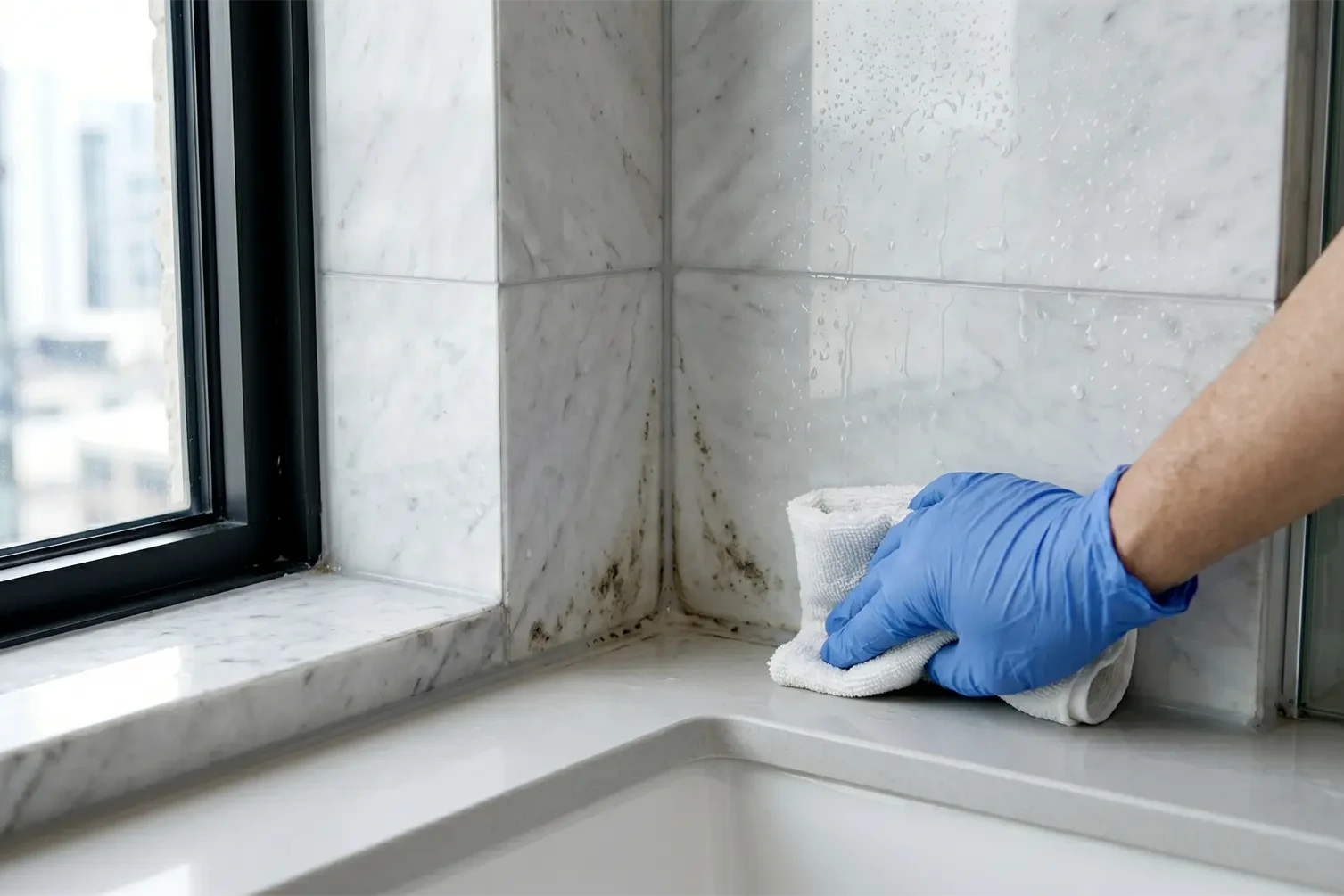

Finding black spots around your window frames during the coldest months is a common but frustrating problem for many homeowners. If you want to protect your home’s air quality, learning how to caulk windows is the first line of defense against moisture and spores. This guide will walk you through why mold appears in winter and how a fresh seal can save your sills.
Why Your Bathroom Needs Better Airflow
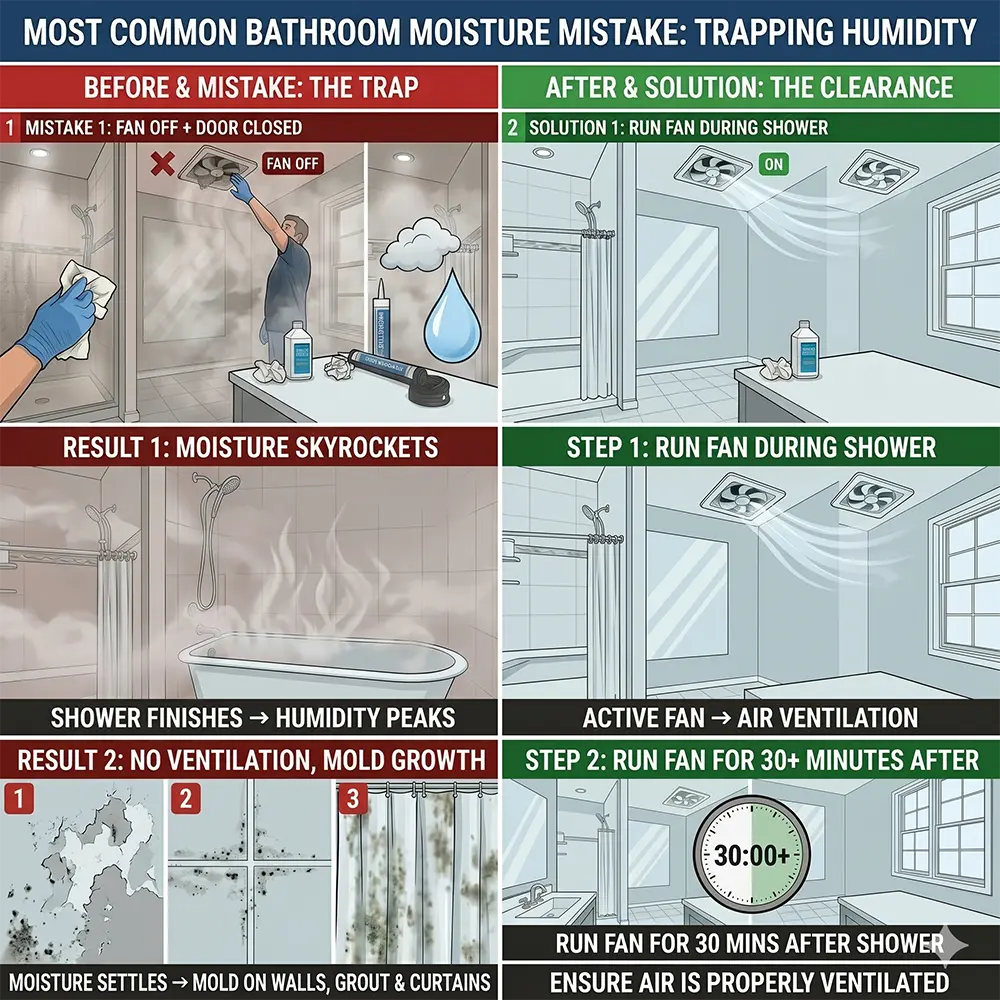
The most common mistake homeowners make is trapping moisture inside the bathroom. After you finish showering, humidity levels skyrocket. If the door is closed and the fan is off, that moisture has nowhere to go but onto your walls, grout, and shower curtains. Always run your exhaust fan during your shower and for at least 30 minutes afterward to ensure the air is properly ventilated.
Why Mold Appears During Winter
Mold thrives on moisture, and windows are the primary site for “thermal bridging.” When warm, humid indoor air hits the cold glass surface, it creates condensation.
- Failed Seals: If your old caulk is cracked, cold air leaks in, making the frame even colder and increasing condensation.
- Trapped Moisture: Water pools in the gaps of the window frame, providing a perfect breeding ground for mold spores.
- Poor Ventilation: Without a tight seal and proper airflow, dampness lingers long enough to cause structural damage.
Step-by-Step: How to Caulk Your Windows
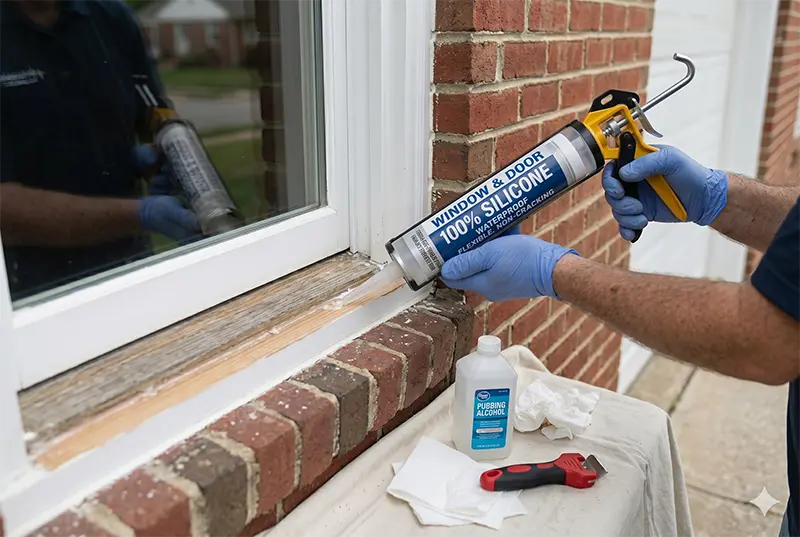
To get a professional-grade finish that lasts, follow these steps:
1. Remove Old Caulk and Clean
You cannot layer new caulk over old, peeling material. Use a putty knife or a specialized caulk remover tool to strip the old sealant. Wipe the area with rubbing alcohol or a bleach solution to kill any existing mold spores before proceeding.
2. Choose the Right Sealant
For windows, a high-quality 100% silicone or “siliconized” acrylic latex caulk is best. Silicone is moisture-resistant and won’t shrink or crack in freezing temperatures.
3. Apply a Continuous Bead
Hold the caulk gun at a 45-degree angle. Apply steady pressure to create a continuous bead along the gap where the frame meets the wall or the glass.
4. Tooling the Joint
Use a damp finger or a caulking tool to smooth the bead immediately after applying. This ensures the sealant is pressed firmly into the gap for an airtight finish.
✨ Expert Tips and Prevention
- Check the Temperature: Most caulks require temperatures above 40°F (4°C) to cure properly. If it’s freezing outside, focus on the interior seal first.
- Manage Indoor Humidity: Keep your home’s humidity between 30% and 50% to reduce the amount of water that collects on the glass.
- Wipe Daily: During extreme cold snaps, wipe away visible condensation each morning to prevent mold from gaining a foothold.
Final Thoughts: Consistency is Key
Taking the time to properly seal your windows doesn’t just stop mold—it also lowers your heating bills and makes your home more comfortable. By addressing the root cause of moisture, you ensure a healthier environment for your family all winter long.
物业智库
物业智库是 Xtends 的资源平台,专注于租赁管理策略、多伦多及安省市场动态,以及实用物业管理指引。我们分享社区发展趋势、租务部署建议、业主法规责任,以及公寓、柏文与独立屋的维护与管理最佳实践。内容专为大多伦多地区的业主与地产代理而设,提供及时且专业的资讯,协助确保合规经营、保障资产价值,并提升长远房地产投资回报。