When temperatures plummet across the Greater Toronto Area, completing your GTA winter home maintenance is the single most effective way to prevent catastrophic property damage and eliminate runaway energy costs. Sub-zero cold fronts, sudden freezes, and heavy snowfall put massive strain on domestic heating, building envelopes, and plumbing infrastructure. Overlooking key seasonal items can quickly result in frozen water lines, broken furnace components, and expensive structural restoration.
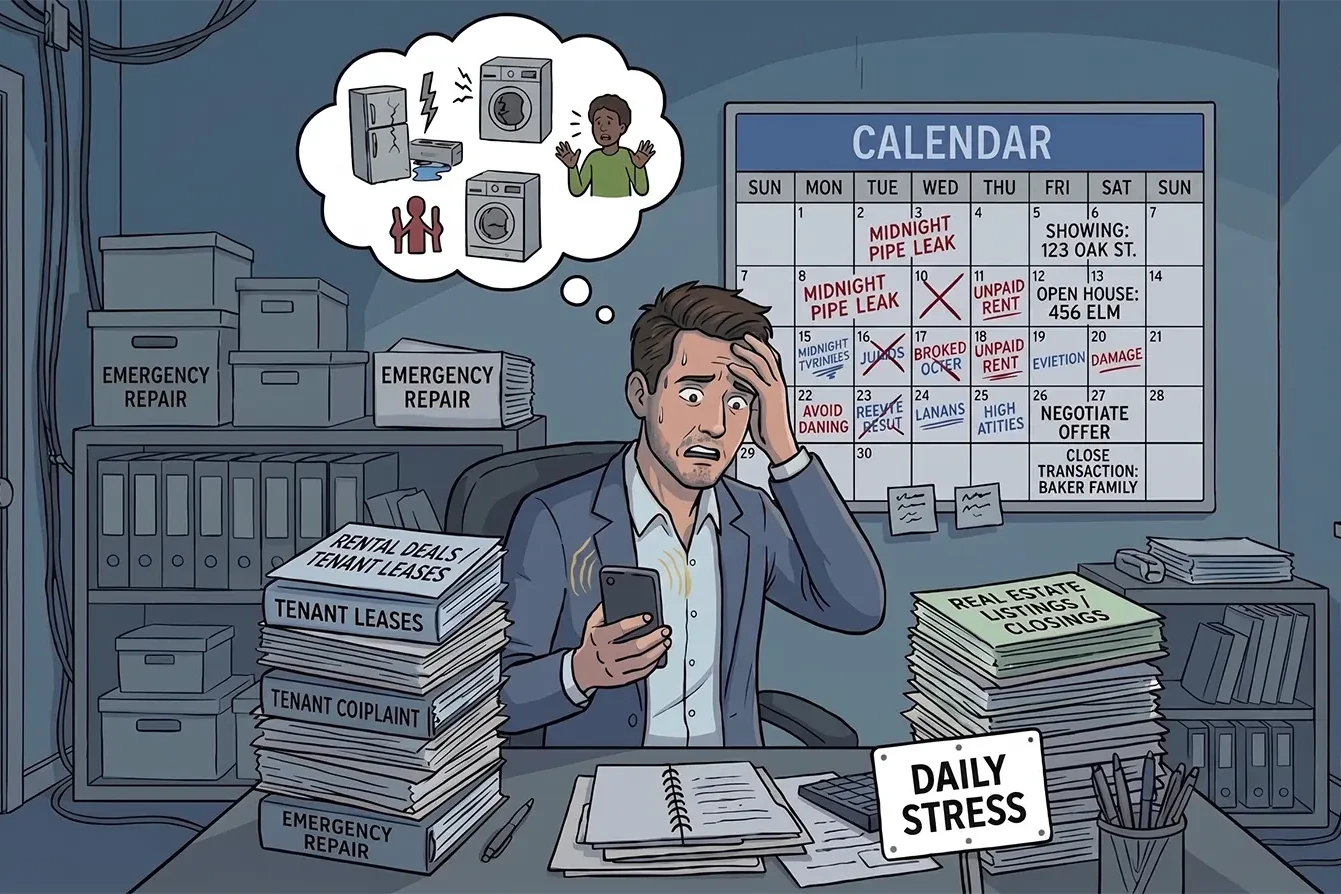
Managing seasonal upkeep often becomes overwhelming when balanced against demanding professional workdays and busy personal routines. Sourcing licensed HVAC technicians, inspecting exterior shut-off valves, auditing balcony weatherstripping, and troubleshooting complex mechanical systems takes substantial time and energy. Minor vulnerabilities left unattended before the deep freeze arrives can quickly escalate into stressful, high-cost emergency repair calls.
Protecting your living space requires an organized, operational approach that secures every major mechanical system in advance. By executing a dependable cold-weather routine, addressing local water mineral conditions, and optimizing modern heating setups, you eliminate cold-weather friction, keep indoor spaces warm, and maintain total peace of mind throughout the winter months.
Your Complete Fall-to-Winter Home Maintenance Checklist
Both freehold houses and high-rise condominiums face specific structural and mechanical challenges during Ontario winters. Tackling these essential maintenance items before sub-zero temperatures arrive protects primary systems and prevents unexpected disruptions.
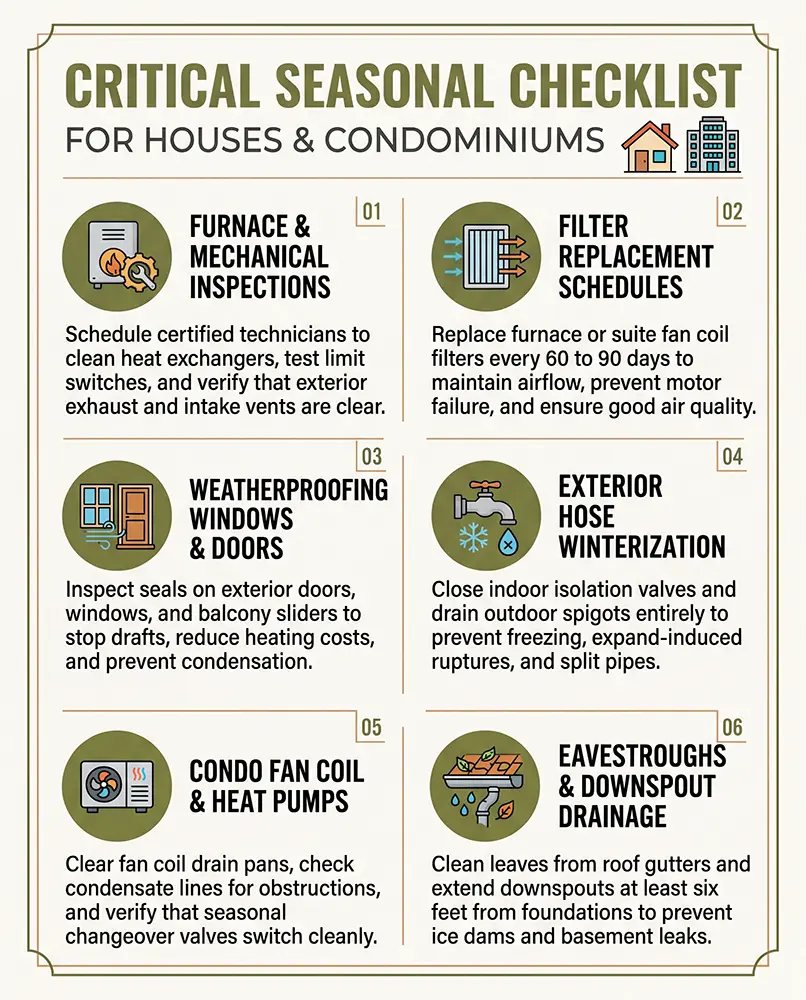
Critical Seasonal Checklist for Houses & Condominiums
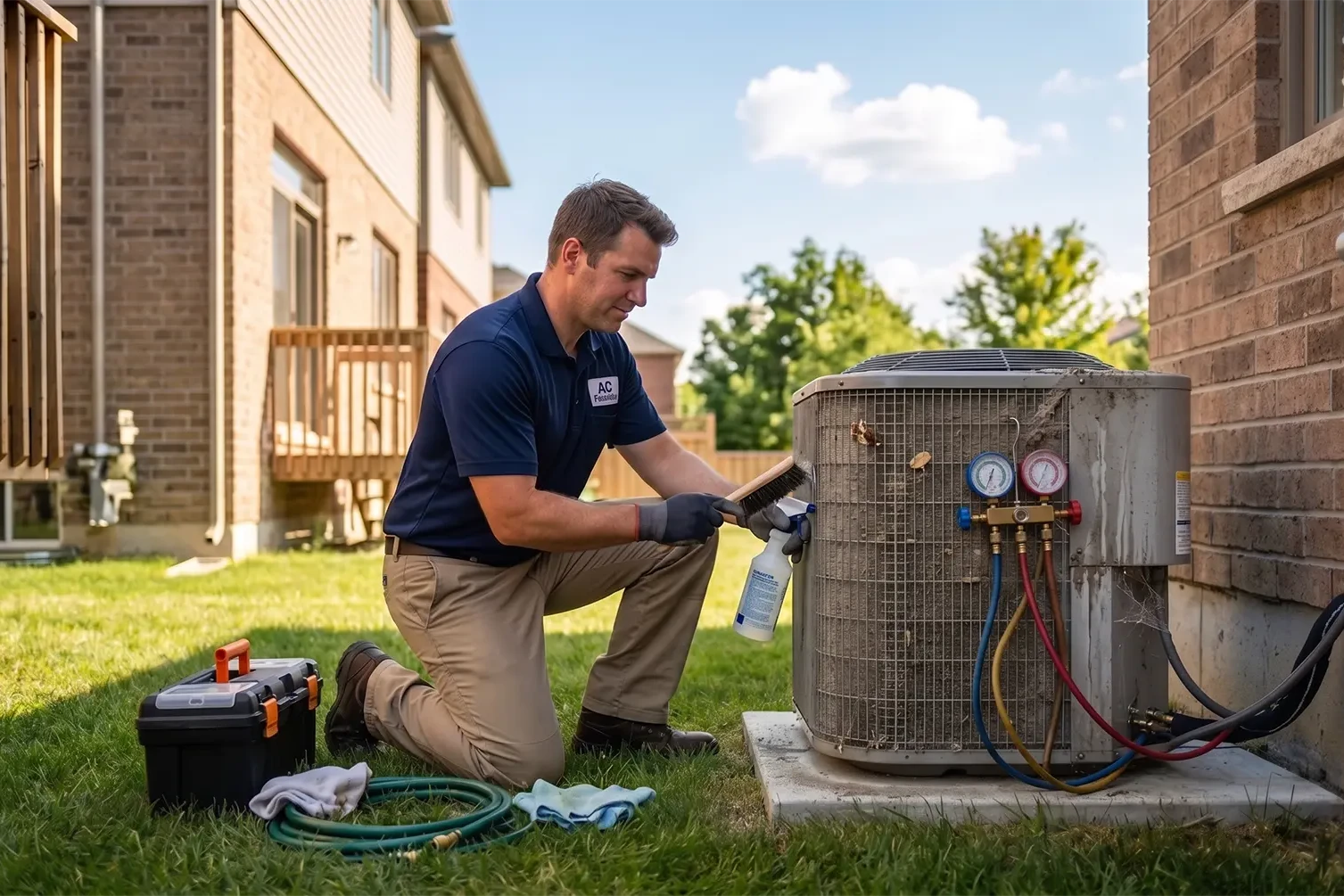
- Furnace and Mechanical Inspections: Schedule certified technicians early to clean heat exchangers, test limit switches, and verify exterior exhaust and intake vents remain completely free of exterior debris.
- Filter Replacement Schedules: Replace standard furnace or suite fan coil filters every 60 to 90 days to maintain strong airflow, prevent blower motor failure, and preserve indoor air quality.
- Window and Sliding Door Weatherproofing: Audit perimeter seals along exterior doors, windows, and condo balcony sliders to eliminate cold drafts, reduce heating consumption, and stop condensation runoff.
- Exterior Hose Spigot Winterization: Close interior water isolation valves and drain outside hose bibs completely; trapped water inside outdoor lines expands rapidly and splits interior pipes behind finished walls.
- Condo Fan Coil and In-Suite Heat Pumps: Clear fan coil drain pans, check condensate drain lines for obstructions, and ensure seasonal changeover valves switch cleanly from cooling to heating mode.
- Eavestroughs and Downspout Drainage: Clean leaves from roof gutters and direct downspouts at least six feet away from home foundations to avoid ice damming and basement water penetration.
Tap Water Quality: Managing Hard Water, Spots, and Scale
Municipal water throughout Toronto and surrounding regions carries high concentrations of dissolved minerals like calcium and magnesium. Left unmanaged, hard water degrades domestic appliances and leaves stubborn residue throughout your living spaces.
Mitigating Water Stains, Scale, and Fixture Wear
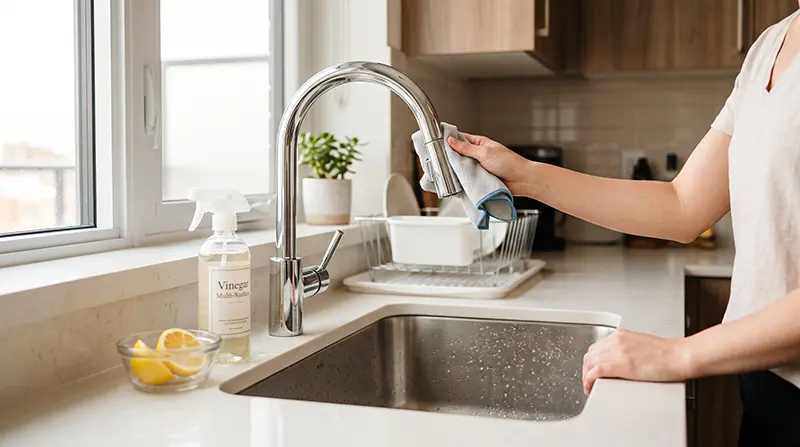
- Mineral Buildup on Fixtures and Glassware: Hard water evaporates on glassware, chrome faucets, and shower doors, depositing chalky white limescale that dulls finishes and resists everyday cleaning products.
- Shortened Appliance Lifespans: Mineral scale coats internal heating elements in water heaters, dishwashers, and washing machines, forcing units to run longer, consume more electricity, and suffer premature mechanical breakdowns.
- Internal Plumbing Deterioration: Mineral deposits restrict water flow through faucet aerators and showerheads while degrading internal rubber flappers inside toilet tanks, triggering hidden, continuous water leaks.
- Water Softener and Filtration Protection: Installing whole-home ion-exchange water softeners or targeted reverse osmosis filtration eliminates mineral buildup, protects fixtures, and extends the lifespan of expensive domestic appliances.
All-Year Comfort: Upgrading to a Modern Heat Pump
Cold-climate air-source heat pumps have become a leading heating and cooling solution across Ontario, providing efficient climate control throughout the year without requiring extensive duct modifications.
Integrating Heat Pumps with Existing HVAC Infrastructure
- Hybrid Dual-Fuel Heating: A cold-climate heat pump integrates seamlessly with an existing forced-air furnace and ductwork. The heat pump efficiently warms your home during moderate winter days, automatically handing over heating duties to the furnace during severe cold snaps below -15°C.
- Substantial Energy Savings: Heat pumps move heat from the outdoor air inside rather than generating warmth through combustion, significantly reducing overall fossil fuel use and lowering seasonal utility bills.
- Integrated Year-Round Climate Control: The same heat pump unit acts as a high-efficiency central air conditioner during hot, humid summer months, ensuring balanced indoor temperatures on every floor.
- Consistent Air Circulation: Heat pumps supply a steady, continuous stream of warm air rather than the intense, dry temperature spikes associated with older combustion furnaces, supporting better humidity balance and indoor comfort.
Bonus Reminder: The Fall Time Change & Home Safety Reset
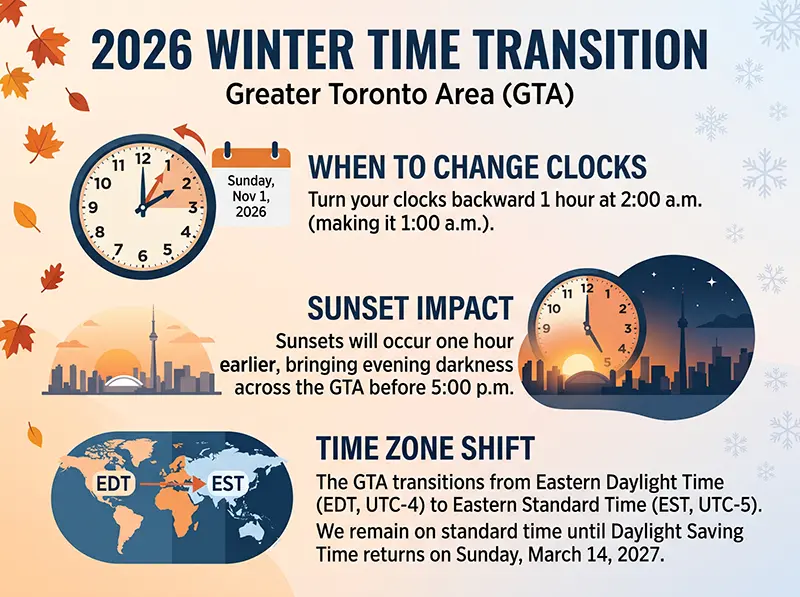
2026 Winter Time Transition Details
- When to Change Clocks: Turn your clocks backward 1 hour at 2:00 a.m. on Sunday, November 1, 2026 (turning back to 1:00 a.m.).
- Sunset Impact: Sunsets will occur one hour earlier, bringing evening darkness across the GTA before 5:00 p.m.
- Time Zone Shift: The GTA transitions from Eastern Daylight Time (EDT, UTC-4) to Eastern Standard Time (EST, UTC-5), remaining on standard time until daylight saving time returns on Sunday, March 14, 2027.
Essential Clock-Change Action Items
- Detector Battery Upgrades: Replace 9V or AA backup batteries in all smoke and carbon monoxide detectors, verifying that every unit functions properly before winter heating runs continuously.
- Exterior Lighting and Timer Adjustments: Reset digital or mechanical timers on exterior porches, walkways, and driveways so lights activate before 5:00 p.m. to improve visibility and avoid outdoor slip hazards.
- Thermostat Program Resets: Re-synchronize programmable smart thermostats to ensure scheduled morning and evening heating setpoints match the new standard time hours.
Step-by-Step Emergency Protocol: Responding to Heating or Plumbing Failures
When freezing weather triggers a sudden mechanical breakdown or plumbing emergency, following a clear sequence of actions prevents secondary structural damage.
Emergency Incident Resolution Steps
- Isolate and Contain the Issue: Determine immediately whether the emergency involves an active water leak or a total loss of heat; close the main water shut-off valve right away if water is escaping.
- Prevent Pipe Freeze-Ups: If the heating system stops operating during freezing temperatures, turn sink taps on to a thin, steady drip to keep water moving through exposed plumbing.
- Dispatch Licensed Technicians: Contact certified, emergency HVAC or plumbing specialists immediately to diagnose the failure and execute repairs.
- Document Physical Conditions: Photograph any mechanical error codes, leaking valves, or water damage on drywall and flooring for insurance or warranty validation.
- Verify Full System Restoration: Once repairs conclude, check every heat register for consistent warm airflow, monitor indoor ambient temperatures, and inspect surrounding floors and walls for moisture.
Final Thoughts & Effortless Property Peace of Mind
Navigating winter weather across the GTA requires regular oversight, seasonal planning, and prompt maintenance. Keeping up with furnace inspections, monitoring hard water scale, managing heating transitions, and coordinating urgent repairs can easily eat into your free time and create unwanted stress. Maintaining your home in peak operating condition should never pull you away from your career, personal passions, or time with family.
Insights
Insights is Xtends’ resource hub for rental management tips, Toronto and Ontario market updates, and practical property guidance. We share insights on neighborhood trends, leasing strategies, landlord responsibilities, and condo, apartment, and house maintenance best practices. Designed for landlords and realtors in the Greater Toronto Area, our articles deliver timely information to support compliance, protect property value, and maximize long-term real estate returns.