
Summer has finally arrived in Ontario, bringing beautiful sunny days alongside intense humidity. For landlords, realtors, and tenants alike, this seasonal shift means it is time to prioritize summer AC maintenance to avoid middle-of-the-night emergency calls. A malfunctioning cooling system can quickly turn a comfortable condo, apartment, or house into an unlivable sauna.
Before the peak summer heat waves hit the Greater Toronto Area, understanding how your air conditioning operates—and what to check when it misbehaves—can save you thousands of dollars in unnecessary repair bills.
Understanding Your Property’s Cooling System
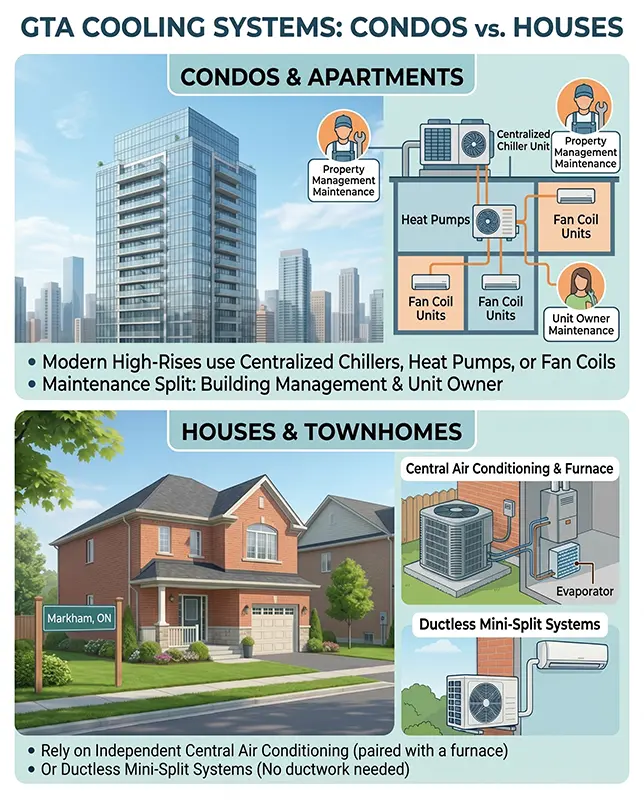
Depending on the type of real estate you own or occupy in the GTA, your cooling system will look and operate differently.
- Condos and Apartments: Most modern high-rises utilize centralized chiller systems, heat pumps, or individual fan coil units. Maintenance is often split between building property management and the unit owner.
- Houses and Townhomes: These typically rely on independent central air conditioning units (paired with a furnace) or ductless mini-split systems.
Regardless of the property type, a sudden system failure is a major headache. Fortunately, many common issues stem from simple oversights rather than catastrophic mechanical failures.
Knowing When to Replace: The Lifespan of Your AC System
How many years should a cooling system actually last before it stops working entirely? In Ontario, our AC units sit idle all winter and then pull double duty during intense, humid summer heatwaves. This stark seasonal contrast puts unique stress on the equipment.
On average, here is the lifespan expectancy for different residential systems in Canada:
- Central Air Conditioners (Houses & Townhomes): Typically last 15 to 20 years. With annual preventative maintenance, a high-quality central AC can push past the 20-year mark, though its overall energy efficiency will drop significantly.
- Condo Heat Pumps: Usually last 10 to 15 years. Because in-suite heat pumps handle both heating in the freezing winter and cooling in the summer, their compressors endure double the mechanical wear and tear.
- Condo Fan Coil Units: Can last 15 to 25 years. These have a simpler mechanical design, but neglecting basic maintenance can cut that lifespan down to just 10 years due to internal mold or rusted drain pans.
- The HVAC “50% Rule”: If your AC unit is over 12 years old and a single repair bill costs more than 50% of what a brand-new system would cost, it is almost always more cost-effective to replace it rather than patch it up.
Common AC Failures and What Causes Them
When an air conditioner acts up, it usually presents one of three frustrating symptoms. Here is a look at what is typically happening behind the scenes:
1. The AC is Running but Not Blowing Cold Air
If your vents are breathing warm or room-temperature air, the system is struggling to reject heat.
- ⚠️ The Cause: This is most frequently caused by a severely clogged air filter restricting airflow, or a blocked outdoor condenser unit surrounded by dirt, leaves, or cottonwood fuzz. It can also point to a low refrigerant level due to a leak.
2. The Fan Stopped Working Entirely
When the indoor or outdoor fan refuses to spin, air cannot circulate across the cooling coils.
- ⚠️ The Cause: A tripped circuit breaker is a common culprit. Mechanically, it could be caused by a burnt-out blower motor, a broken fan belt, or a failed start capacitor (the “battery” that kicks the motor into gear).
3. The Entire AC System Won’t Turn On
The house is hot, and the air conditioning system is completely silent.
- ⚠️ The Cause: This usually points to a communication or power issue. It ranges from dead thermostat batteries to a tripped safety overflow switch caused by a clogged condensate drain line backed up with algae.
DIY Steps to Take Before Calling an HVAC Technician
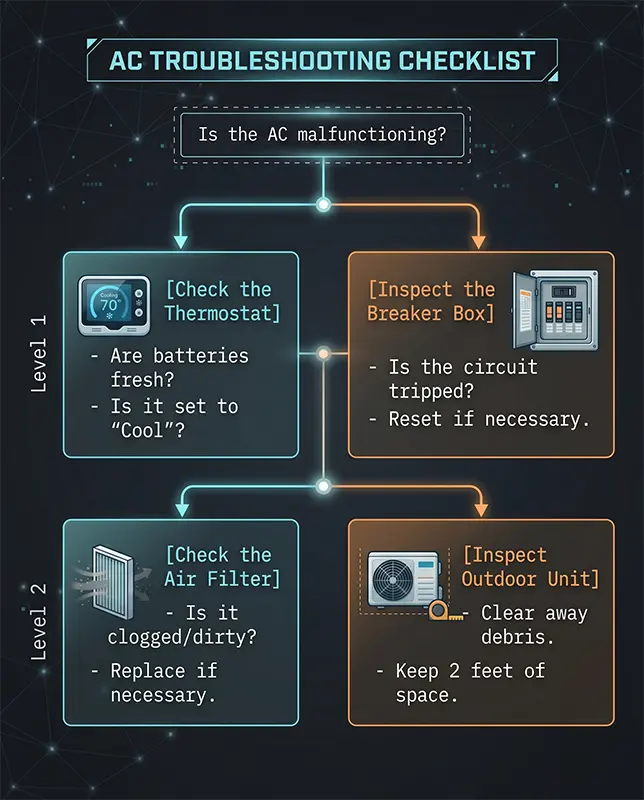
Before submitting an urgent maintenance request or paying premium weekend rates for an emergency technician, check these five components:
Check the Thermostat Settings
It sounds simple, but double-check that the thermostat is explicitly set to “Cool” and not “Heat” or “Fan Only.” If the screen is blank or fading, replace the batteries entirely.
Inspect the Electrical Panel
Air conditioners draw a significant amount of power upon startup. Locate your property’s electrical panel and check for a tripped breaker. Flip the AC switch completely to “Off” and then back to “On” to reset it.
Replace the Air Filter
A dirty air filter suffocates your HVAC system. In a house or townhome, locate the furnace filter slot. If it is coated in grey dust, replace it immediately. For condo fan coil units, check the return grille mesh filter and give it a thorough vacuuming or rinse.
Clean Away Outdoor Debris
For detached houses, walk outside to the condenser unit. Ensure there are at least two feet of clear space around the metal cage. Clear away weeds, long grass, leaves, and patio furniture that might be blocking crucial exhaust airflow.
Examine the Condensate Drain Line
Look for the PVC drain pipe near your indoor unit. If you see a small safety switch (a float switch) sitting in a tray of standing water, your drain line is clogged. Sucking the blockage out from the outside end of the pipe with a wet/dry shop vac can instantly restore power to the system.
Final Thoughts
Investing a little time into proactive summer AC maintenance keeps your property cool, protects your real estate assets, and keeps tenants happy. If you have run through these diagnostic steps and the system still refuses to cooperate, it is time to bring in a licensed professional.
Managing seasonal maintenance, tenant requests, and vendor coordination can easily become a full-time job. At Xtends Rental Management, we handle the day-to-day operations, emergency repairs, and preventative maintenance for landlords across the Greater Toronto Area.
Tired of dealing with emergency maintenance calls? Contact Xtends today to learn how we protect your real estate investments while giving you total peace of mind.
Insights
Insights is Xtends’ resource hub for rental management tips, Toronto and Ontario market updates, and practical property guidance. We share insights on neighborhood trends, leasing strategies, landlord responsibilities, and condo, apartment, and house maintenance best practices. Designed for landlords and realtors in the Greater Toronto Area, our articles deliver timely information to support compliance, protect property value, and maximize long-term real estate returns.